Recognizing a Proper Furnace Utility Setup
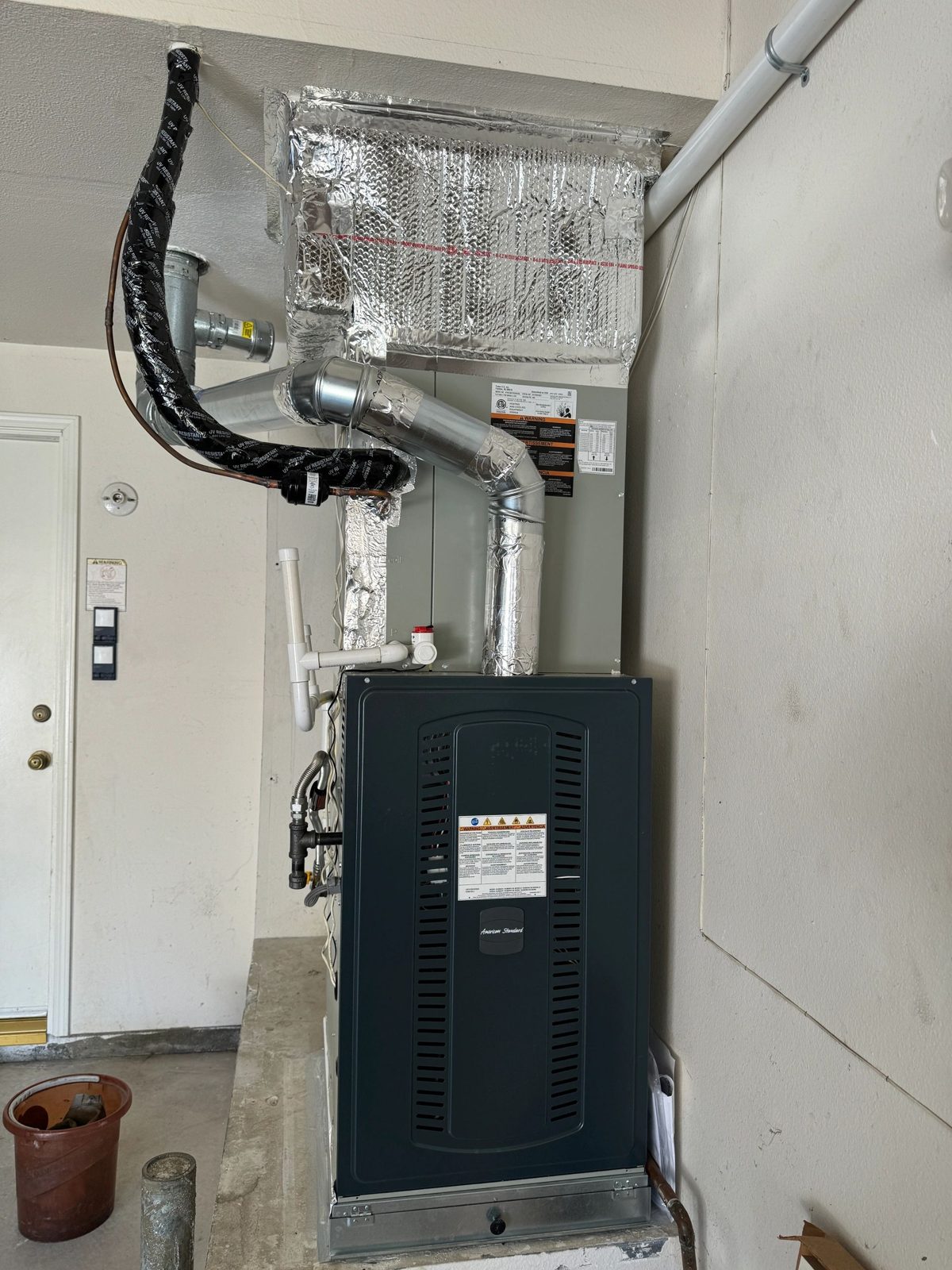
Homeowners in Southern California often see their heating equipment tucked into utility closets or garages. An American Standard furnace in such a space typically includes visible duct connections, refrigerant lines, and insulation wrapped around pipes. Checking these elements regularly helps confirm the system is positioned correctly and free from obvious obstructions.
Common Components in the Photo Area
The furnace itself sits at the center, with supply and return ducts extending outward. Pipes for gas and condensate drainage run alongside, while insulation prevents energy loss and condensation. These features appear consistently in well-organized utility areas and support steady airflow throughout the home.
Why Insulation and Duct Placement Matter
Properly sealed ducts reduce temperature swings between rooms. Insulation around pipes limits moisture buildup that can occur in milder coastal climates. When these items remain intact, the furnace operates more quietly and experiences fewer service interruptions during peak winter months.
Simple Homeowner Checks
Walk through the utility space monthly and note any loose insulation or disconnected duct sections. Ensure nothing blocks airflow around the furnace. If unusual noises or temperature differences appear, contact a licensed technician. BOMING Air Conditioning & Heating can assess your existing setup and recommend next steps. Call 657-275-5855 for a professional review.